Commentary: Are lone wolves or regional terrorist networks more dangerous to Singapore?
SINGAPORE: The Ministry of Home Affairs (MHA) appear on Th (Jun 1) that the threat of terrorism to Singapore stands at its highest level in recent years and that the Islamic State militant group has demonstrated that Singapore is "very much on its radar".
The Ministry too said the threat posed by radicalised individuals is Singapore'south greatest business organisation, even as the possibility of an attack by regional terrorist networks remains.
But this differentiation between a lone wolf and a regional network is not that clear cutting. In fact, if nosotros held onto our former means of looking at new terrorist threats, and recollect almost the menace every bit either of the ii, we may inadvertently miss the real nature of terrorism to Singapore.
A Alone WOLF MAY Exist More VOLATILE
Many of us think of a alone wolf every bit a lonely individual operative who functions in solitude and conducts an act of terrorism on the spur of the moment, without a connectedness to a radical network. However, this is seldom the case.
In its current form, the Islamic Land militant grouping has a hybrid structure comprising both a centralised control and a diffused global network. Their followers who call themselves junud khalifa or soldiers of the caliphate epitomise organised anarchy.
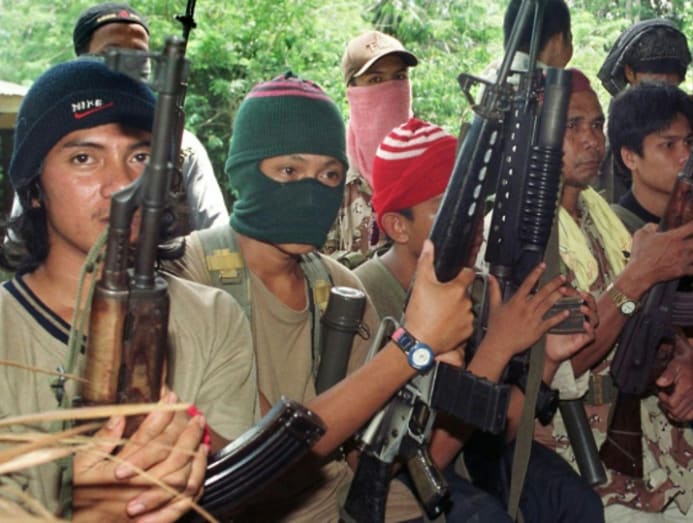
The soldiers of the caliphate include lone wolves, homegrown terrorists, pocket-sized cells and diffused network structures. Compared to a formally organised network, this loose drove of operatives is in a better tactical position to hide their activities and tin can be far more effective.
Such an organisational pattern is gaining ground. A video released past Islamic State on Jun 21, 2022 featured fighters from Indonesia, Malaysia and the Philippines calling on other fighters to unite under the leadership of Isnilon Hapilon, former deputy caput of the Abu Sayyaf Group, and to conduct lone wolf attacks within the Southeast Asian region. This direction of encouraging followers to conduct individual acts of violence is a message that other Islamic Country Southeast Asian operatives in Iraq and Syrian arab republic such as Indonesian Bahrun Naim and deceased Malaysian Muhammad Wanndy have consistently sent.
So the lone wolf role player through ascribing to the group'south ideology, pledging allegiance to terrorist leadership and accessing a community of supporters or like-minded individuals online would still exist role of a larger network.
Oftentimes, he belongs to a diffused and loose network construction. For instance, Omar Mateen - the lone wolf attacker of the Orlando nightclub in June 2022 - had called the emergency hotline 911 and iterated his allegiance to Islamic Country, even though it was not clear that he was formally connected to the grouping.
Terrorists would probably like to label themselves every bit lonely wolves – projecting an paradigm of independence and machismo. They would probably be keen to bear witness that they are not followers or sheep, but are willing to get down an uncharted heroic road as a brave martyr. This is in line with the images of bravado representative of wolves of the caliphate that Islamic State followers like to projection.
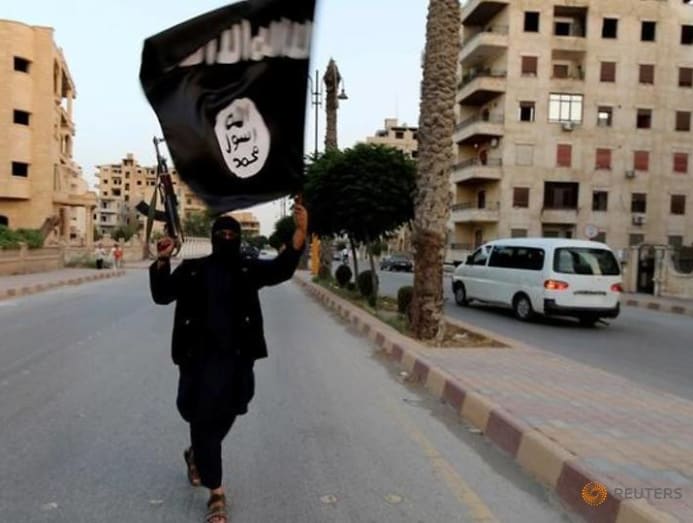
Withal, their tactics may not be a lonely wolf's for they exercise not act in isolation. In fact, in some ways, as a formal network, terrorists may exist less unsafe. While terrorist networks have the chapters to wrought more damage in an organised assault, especially if their members have bomb-making skillsets, a alone wolf may be more volatile and more than violent for he does not have to suffer the pressures of seeking concurrence from a group.
BUT Solitary WOLVES Go IDEAS AND HELP FROM NETWORKS
The differentiation between a solitary wolf and an operative in a formal network is further blurred because of the irresolute methods of terrorism today. Ideological extremism recognises neither borders nor territory, and its members share only a resolute endeavor to connect and aggrandize the capabilities of existing and time to come networks.
An Islamic State video released in May 2022 reiterated the thought of a caliphate in the Nusantara (Malay Archipelago) and named regime leaders of Singapore, Malaysia, Republic of indonesia and the Philippines as key targets.
The strategic use of social media and encrypted chat applications has augmented such networks and opened up new avenues for radicalisation, recruitment and fundraising activities to spread. Radical ideas tin now cantankerous-pollinate with greater ease, and new recruits can receive indoctrination remotely without a spiritual leader having to leave his house – or jail cell, in many other cases.
The capabilities and skillsets needed to manufacture deadly bombs can similarly be passed on easily. Have for instance the recent spate of using pressure cooker bombs in Southeast Asia, which take been linked to instructions on how to construct such pressure cooker bombs from an Al Qaeda-inspired magazine in 2022 and a tradecraft manual that was circulated past Bahrun Naim in 2016.
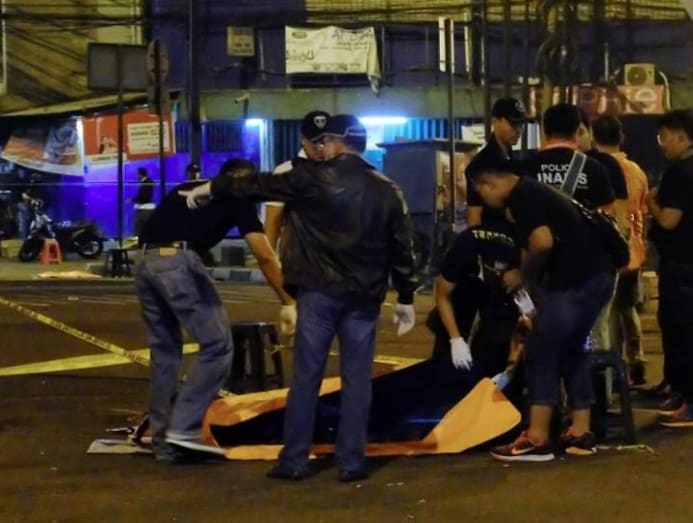
A more sophisticated publication circulated in Oct 2022 touched more concretely on the methods of activity and tools that terrorists can use, and highlighted how to target places in Singapore, along with several other countries.
RETURNING Foreign FIGHTERS ARE ALSO A HUGE THREAT
I more central challenge to Singapore is the dangers posed by returning foreign fighters from Republic of iraq and Syria. Comprising not simply those who have fought and lost in Islamic States' militant battles but also deportees who were turned away by immigration in Turkey and countries bordering Republic of iraq and Syria, these returning fighters may be gunning for a fight, having been unsuccessful in their bid to contribute to Islamic State.
Nonetheless, while registered every bit successful instances of interdicted strange fighters abroad, when they are deported to Southeast Asia, limited engagement is done. From 2022 to March 2017, information technology is estimated that the total number of deportees reached a staggering 440 in Republic of indonesia lone.
Worse, these might not merely be nationals returning to Southeast Asia but experienced foreign terrorists with the power to wreak all sorts of havoc. Foreign fighters killed in Southern Philippines - namely Moroccan Omar Khattab in Apr 2022 and Belizean Nadir Ahmad in January 2022 - were alleged flop-making experts.
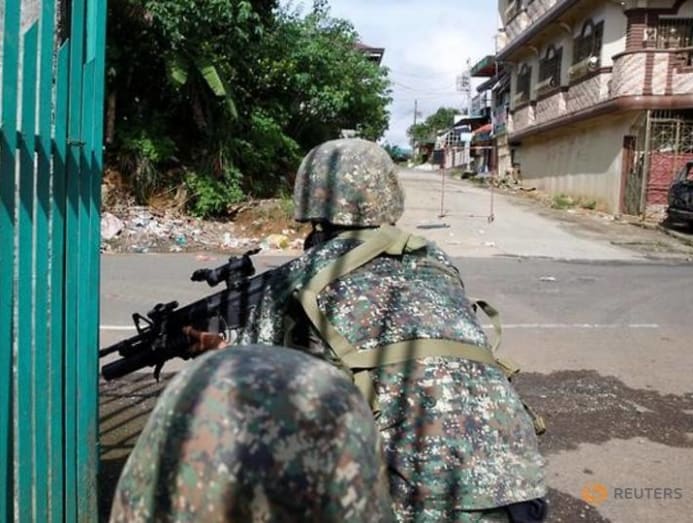
It would be erroneous to assume that foreign fighter returnees would only return to their countries of origin. Many come from nationalities outside Asia. In the most recent siege in Marawi, amidst those killed were Chechen, Yemeni and Saudi nationals. The siege in Marawi suggests foreign involvement in the militants' consolidation and planning efforts, with the intent of creating a regional base in the Philippines.
TAKES A NETWORK TO DEFEAT A NETWORK
Attempts to found an Islamic State wilayah (province) in the region grow with the proliferation of groups pledging allegiance to Islamic State inside Southeast Asia. Whether we think of them every bit lone wolves or networks, group loyalty is the cornerstone and prized nugget of these ideological fundamentalists.
This strong sense of belonging to the group renders those within the network a sense of identity that they must hold steadfastly to. It is this potent personal bail that ties terrorist networks together, much as some individuals might human activity on their own personal instincts.
So maybe, regardless of the labels nosotros assign them – lone wolves or regional networks – there is some truth to the idea that a strong community response and intervention by friends and families of these individuals may be the best solution. Increased coordination and cooperation with regional counter-terrorism and intelligence agencies is also the best collective style alee.
Information technology volition take a network to defeat a network.
Dr Jolene Jerard is a Research Swain with the International Centre for Political Violence and Terrorism Research at the S. Rajaratnam School of International Studies at Nanyang Technological University.
Source: https://cnalifestyle.channelnewsasia.com/commentary/commentary-are-lone-wolves-or-regional-terrorist-networks-more-dangerous-singapore-295706
0 Response to "Commentary: Are lone wolves or regional terrorist networks more dangerous to Singapore?"
Post a Comment